At a glance
- Scientific name: Python regius
- Family: Pythonidae
- AKA: “Royal python”
General information
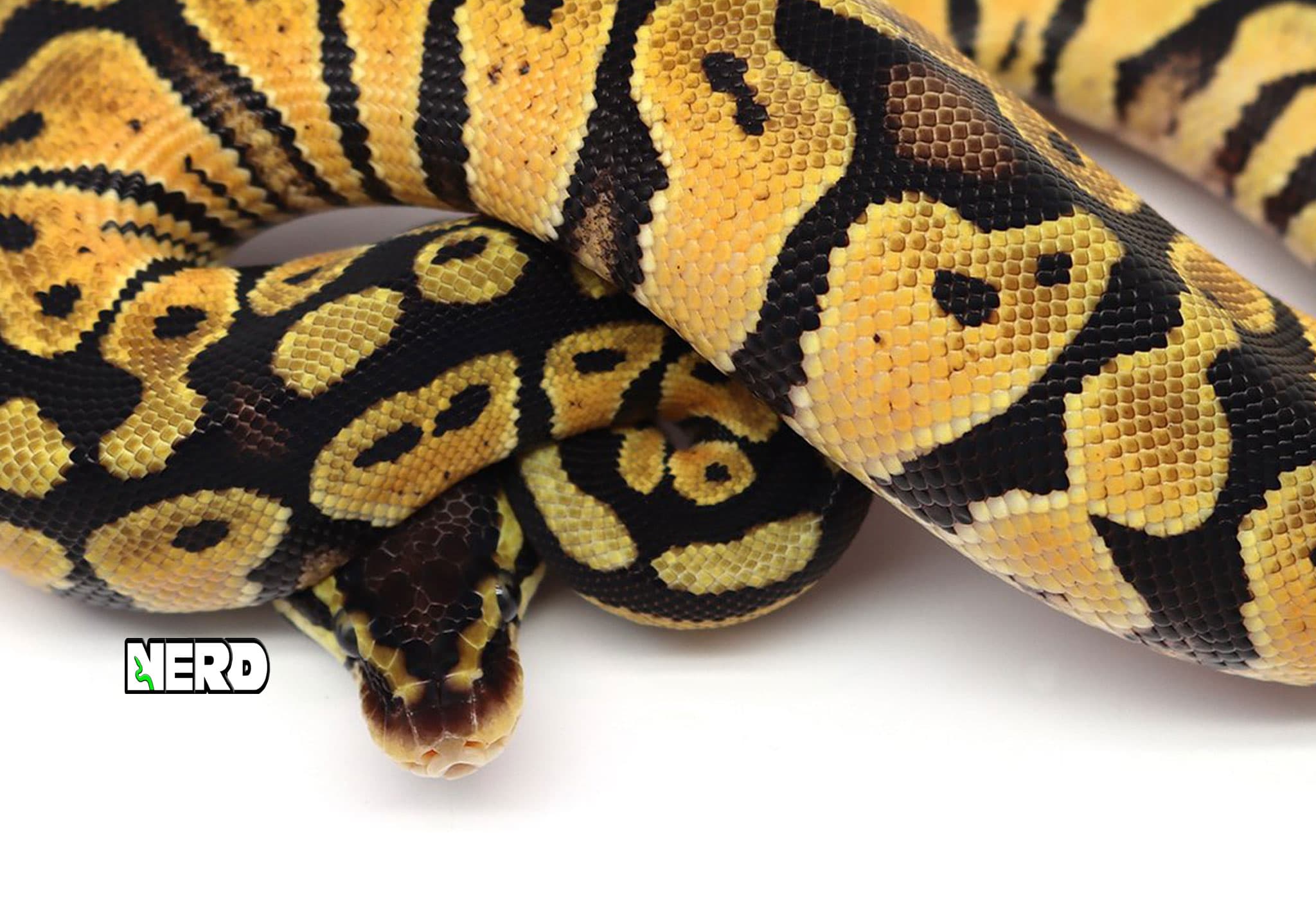
Ball pythons are sturdy snakes with a distinct head and slender neck. Normal coloring is black with yellow, gold or brown markings. In some snakes the pattern is “broken,” banded or reduced, and many show some broken striping down the back. Wild-caught ball pythons are notoriously hard to settle in, and they are the reason balls have a reputation as terrible feeders. A captive-born, well-established ball python is a must for a good first experience. These are somewhat shy snakes that do much better in captivity when they come from a reliable captive-bred source.
Size
Hatchlings: about 10″. Adults: females average 3′–5′; males average 2′–3′.
Mature females are usually noticeably larger than males. A 5+ foot ball python is considered large, though lengths of 6+ feet have been reported.
Lifespan
15 years, and ball pythons may live 40 years or more if kept properly in captivity. They are a huge commitment, and one to take seriously: when you buy a ball python, it is yours forever.
Color mutations
Breeders have created more than 6,000 genetic combinations in ball pythons so far, and new ones are produced every year by breeders across the US and around the world.
Difficulty level
Beginner. Easy, but the keeper needs a general knowledge of snake care. Captive-bred, well-started ball pythons make an excellent first snake for a beginner.
Enclosure
Enclosures can be as simple or as elaborate as you can keep up with. Remember that the more “stuff” you put in a cage, the more “stuff” you have to clean and disinfect regularly. Many different enclosures work very well for ball pythons, including plastic sweater boxes (e.g. Rubbermaid), melamine racks, Freedom Breeder cages and store-bought plastic reptile cages (e.g. Vision Herp and similar brands).
Glass aquariums also work, but their screen tops can make it very hard to hold humidity. See our Snake Caging care sheet for more. Juvenile ball pythons seem to do well in smaller enclosures that make them feel secure; a small snake in a big cage can become overwhelmed and stressed.
Fortunately, adult ball pythons don’t need very large or elaborate enclosures. A 36″ x 18″ x 12″ enclosure will comfortably house an adult. Remember that ALL enclosures need a proper temperature gradient, with a hot spot on one end and a cooler spot on the other.
Substrate
A few substrates work well. Newspaper is the cheapest and easiest to clean and disinfect: out with the old, in with the new. Cypress mulch is great for holding humidity, but remember that too much humidity can be as harmful as too little, if not more. Never use any substrate containing cedar; it is deadly to reptiles.
Temperatures & heating
Give your ball python a basking spot of 88–92°F and an ambient (background) temperature of 78–80°F. The ambient temperature should not fall below 75°F. It is vitally important to KNOW the temperatures you are keeping your snake(s) at.
DO NOT GUESS! A digital indoor/outdoor thermometer with a probe works well. Stick the thermometer inside the cage on the cool end and place the probe on the warm end, and you’ll have both sides covered at once.
There are several ways to heat the enclosure, including under-cage heating pads, ceramic heat emitters and basking bulbs (both regular daytime and red “night” bulbs). With heat emitters and bulbs, watch the humidity closely, especially with a screen top, as both dry the air quickly. Use thermostats, rheostats and/or timers to control your heat source. Do not use hot rocks with snakes; they often heat unevenly over too small an area and can cause serious burns.
Humidity
Proper humidity matters for ball pythons, but as noted above, too much can be as bad as too little. “Humidity” means the amount of moisture in the air. To give your snake a humidity level of 50–60%, you have a couple of options.
1. Use cypress mulch or a similar mold-resistant substrate that can be misted. Cypress turns tan when dry and rich brown when wet, so you can see when it needs dampening again.
2. Make a “humidity box” for your snake: pack a plastic container with damp sphagnum moss (think of a well-wrung-out washcloth), cut a hole in the top or side and place it in the enclosure so your python can use it whenever it likes.
One of the biggest problems we see in captive ball pythons is respiratory distress caused by low humidity, wrong temperatures and a screen-top enclosure that lets conditions in the room affect the air inside the cage.
If your enclosure has a screen top, you will probably want to cover most or all of it with plastic, a towel or something else that keeps moisture in. Reliable ambient temperatures matter here too (back to that thermometer!), because warm air holds more moisture than cool air. You want the enclosure humid, not WET. A soggy cage can lead to bacterial and fungal infections, and eventually death.
Lighting
Extra lighting isn’t necessary for this species, but if you use it, run it on a 12/12 cycle: 12 hours on and 12 hours off. Constant bright overhead light stresses snakes, especially a nocturnal one like this.
Hydration
Always give your ball python fresh, clean water. The size of the dish is up to you. If it’s big enough to crawl into, your snake will probably soak in it sooner or later; most seem to enjoy a soak now and then.
Make sure the bowl isn’t too deep for juveniles; about 1″ is enough. Many snakes soil their water bowls now and then, so be ready to clean, disinfect and change the water when needed. A spare bowl helps, so one can be in use while the other is being cleaned.
Caging accessories
The most helpful accessory for a happy ball python is a good hide box, or even a couple. These are secretive snakes that use and appreciate a hiding spot. Put one on each end of the enclosure so your python doesn’t have to choose between temperature and security. Clay flowerpots, plastic flowerpot trays and store-bought hide boxes all work well.
Feeding
Feed your ball python an appropriately sized rodent once a week, meaning prey no bigger around than the python at its widest point. Ball pythons can eat rats from a young age, starting with rat pups or “crawlers” and moving up in size as they grow. Do not handle your snake for at least a day after feeding, as this can cause regurgitation. Ball pythons can be switched to frozen/thawed or pre-killed rodents. Never leave a live rodent unattended with ANY snake. Ball pythons are well known for going on hunger strikes at certain times of year, especially in winter.
Be prepared for your snake to go off feed, and keep a close eye on its overall condition and weight. This is usually nothing to worry about with healthy, well-established pythons, though it can be very frustrating for the keeper. If your snake is healthy, keep up your usual care routine but keep handling to a minimum.
Offer food every 10–14 days until your snake is interested again; it will eventually “turn back on” and start eating normally. Be concerned if your snake is losing weight quickly or keeps regurgitating meals. Many things can cause weight loss and regurgitation, so check meal size and your snake’s enclosure and conditions carefully.
Cage maintenance
Spot-clean your snake’s enclosure as needed, removing feces, urates and uneaten prey as soon as possible. Clean and disinfect the water bowl weekly or every time you refill it. Depending on cage conditions, remove all substrate and cage furniture and fully disinfect the enclosure with a 5% bleach solution weekly. Rinse thoroughly and let it dry before putting the furniture and your snake back. Weekly cleaning keeps bacteria from building up and greatly reduces the risk of your snake getting sick.
Questions about your setup? Stop by and ask us.