Invertebrates
Isopods, millipedes, tarantulas, vinegaroons, mantises and more.
Invertebrates
Isopods
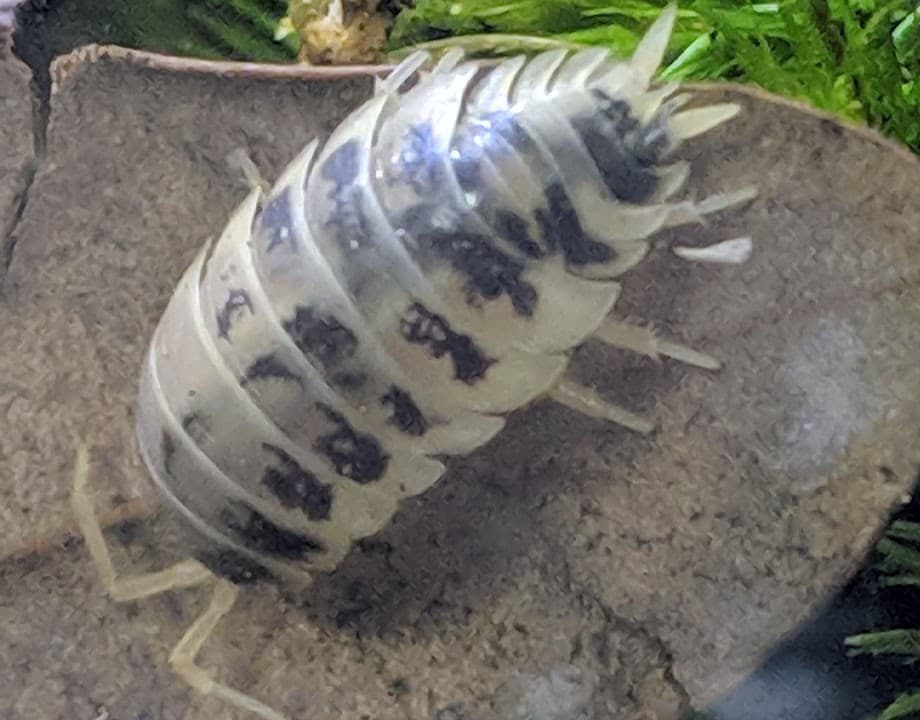
We carry an extensive selection of isopod species, and stock changes often. Isopods (pill bugs and sow bugs) are related to shrimp and crabs.
They're fun to keep on their own, and they're the clean-up crew in a bioactive vivarium. A great first bug for kids and a must for bioactive keepers.
Quick setup
- Enclosure: a plastic tub with small air holes
- Substrate: a few inches of organic soil, leaf litter and rotting wood
- Moisture: one side damp, one side drier
- Temperature: room temperature, about 65–80°F
- Food: leaf litter and rotting wood, plus bits of veggies and fish food
- Handling: fine to pick up gently for a quick look
Springtails
We carry white and orange springtails. These tiny, jumping critters eat mold and leftover food, so they keep a bioactive setup clean.
They pair well with isopods and make easy food for tiny frogs. Anyone with a bioactive tank should have some.
Quick setup
- Enclosure: a small plastic container with a lid
- Substrate: charcoal with a little water, or moist coconut fiber
- Moisture: damp all the time, never dry
- Temperature: room temperature
- Food: a tiny pinch of dry yeast or fish flakes once or twice a week
- Handling: none; tip some onto the soil of your vivarium
Millipedes
We carry a ton of millipede species, and stock changes often. Millipedes are calm, slow and simple to care for.
They make a great first invertebrate for families and anyone who wants a bug they can hold.
Quick setup
- Enclosure: floor space and depth, with a vented lid
- Substrate: 5 inches or more of soil, rotting hardwood and leaf litter
- Moisture: like a wrung-out sponge, never soggy
- Temperature: room temperature, about 70–80°F
- Food: rotting wood and leaves, plus soft veggies now and then
- Handling: gentle is fine; wash your hands after
Tarantulas
Most people fear tarantulas, but beginner species are calm, quiet and easy to keep. Females can live for decades.
A good fit for someone who wants a pet to watch rather than hold.
Quick setup
- Enclosure: floor space, not height; a fall can kill them
- Substrate: 3–4 inches or more of coconut fiber or topsoil
- Humidity: room humidity and a water dish for most beginner species
- Temperature: room temperature, about 70–80°F
- Food: crickets or roaches every 1–2 weeks
- Handling: not recommended
Scorpions
Scorpions glow blue-green under a UV flashlight, which never gets old. Some come from deserts and some from tropical forests, so the setup depends on the species.
They suit a keeper who likes to watch, not handle.
Quick setup
- Enclosure: floor space with a locking lid and a hide
- Substrate: moist soil for tropical species, packed sand and soil for desert ones
- Humidity: high for tropical, dry with one damp corner for desert
- Temperature: about 75–85°F, depending on species
- Food: crickets or roaches about once a week
- Handling: look, don't touch; move with tongs or a cup
Vinegaroons
Vinegaroons (whip scorpions) have big pinchers and a thin whip of a tail, but no venom and no stinger. When scared, they spray a mist that smells like vinegar.
They dig burrows and are easy to care for. A fun, odd pet for someone who wants something different.
Quick setup
- Enclosure: floor space, not height, with a secure lid
- Substrate: 4–6 inches of packed soil that holds a burrow
- Moisture: lower layers slightly moist
- Temperature: room temperature to the low 80s
- Food: crickets or roaches once or twice a week
- Handling: keep it to a minimum; they pinch and spray
Tailless whip scorpions
A vinegaroon has a whip-like tail and lives in a burrow; a tailless whip scorpion has no tail and climbs, using its very long front legs as feelers.
Tailless whip scorpions are flat, fast and harmless, with no venom and no silk. They're a great pick for someone who wants a strange-looking display animal.
Quick setup
- Enclosure: tall, with cork bark to climb and hang from
- Substrate: 2–4 inches of moist soil and leaf litter
- Humidity: high, about 70–80%; mist most days
- Temperature: about 72–82°F
- Food: crickets or roaches once or twice a week
- Handling: not a handling pet; never disturb one while it molts
Praying mantises
Mantises turn their heads to watch you and hunt with lightning-fast arms. Kids love them.
They only live about a year, so a mantis is a great short-term pet and a fun way to learn about bugs.
Quick setup
- Enclosure: tall and well vented, with twigs and a mesh top to hang from
- Substrate: a thin layer of coconut fiber or paper towel
- Humidity: a light misting a few times a week
- Temperature: room temperature, about 70–80°F
- Food: live flies and small roaches, sized to the mantis
- Handling: let it walk onto your hand; never grab
Habitat and supplies
We stock enclosures, substrate, cork bark, leaf litter, misters and live food for every invertebrate we sell, plus everything you need for a bioactive setup.
Not sure what you need? Ask us in the store and we'll put a setup together with you.
Come in and see them
Come in and see what we have. We'll help you pick the right animal and set you up with habitat and feeding information.
Questions? Stop by and ask us.
Keep browsing