Quick facts
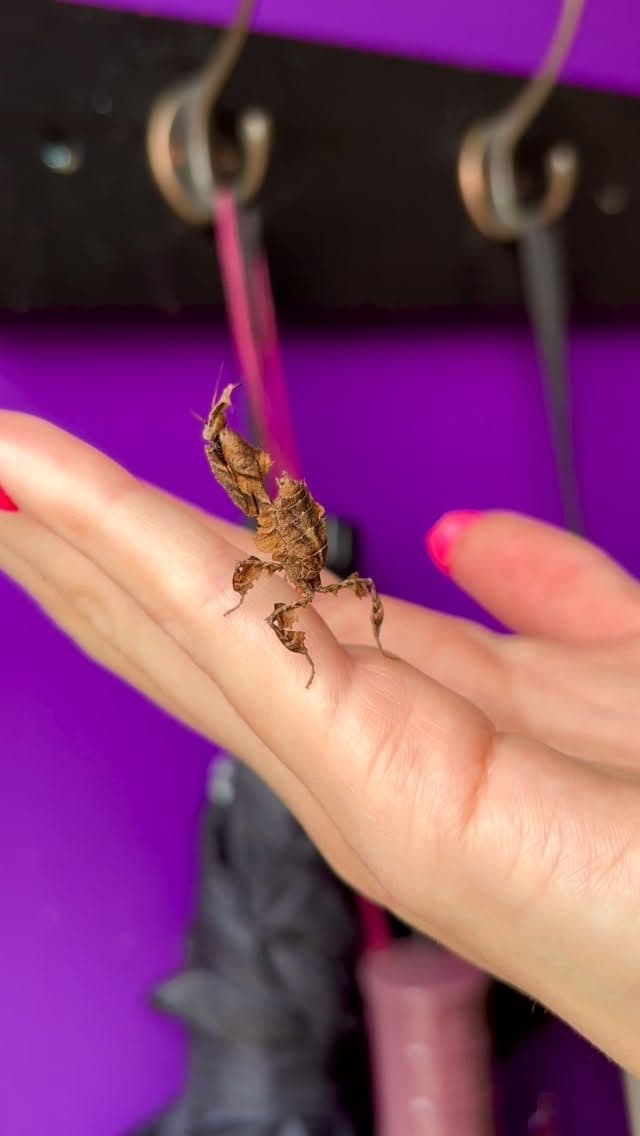
- Many species, from tiny ghost mantises to big Chinese mantises
- Adult size: about 1–5 inches, depending on species
- Lifespan: short, often 6–12 months
- Difficulty: beginner
- Young mantises molt several times as they grow
Enclosure
Give height, not floor space. Make it at least 3 times as tall as the mantis is long, and twice as wide.
Use a mesh top or sides. Mantises molt hanging upside down and need something to grip. Add twigs or fake plants to climb. Keep one per enclosure.
Temperature
Normal room temperature, about 70–80°F, suits most species. Ask us about yours.
Lighting & UVB
No UVB needed. Normal room light for a day and night cycle is fine.
Humidity
Mist lightly a few times a week, more for tropical species. Keep good airflow so it never stays wet and stuffy.
Substrate
A thin layer of coconut fiber or a paper towel on the floor is enough.
Diet & feeding
Mantises only eat live, moving food. Feed fruit flies to small nymphs, then house flies, blue bottle flies and small roaches as they grow.
Prey should be no bigger than about a third of the mantis's length. Feed every 2–3 days and remove uneaten crickets.
Water
Mantises drink drops of water after a light misting. Skip the water dish. Small ones can drown.
Handling
A mantis can walk onto your hand. Let it come to you and never grab it. They are fragile.
Don't handle one that is about to molt or just molted.
Common problems & the vet
If you think something is wrong, find an exotics vet or stop by and ask us.
- Stops eating: often a molt is coming. That's normal.
- Bad molt: usually too dry, too short or nothing to hang from
- Keep them apart. Mantises eat each other.
- A short life is normal for mantises, not a sign you did something wrong
Questions about your setup? Stop by and ask us.