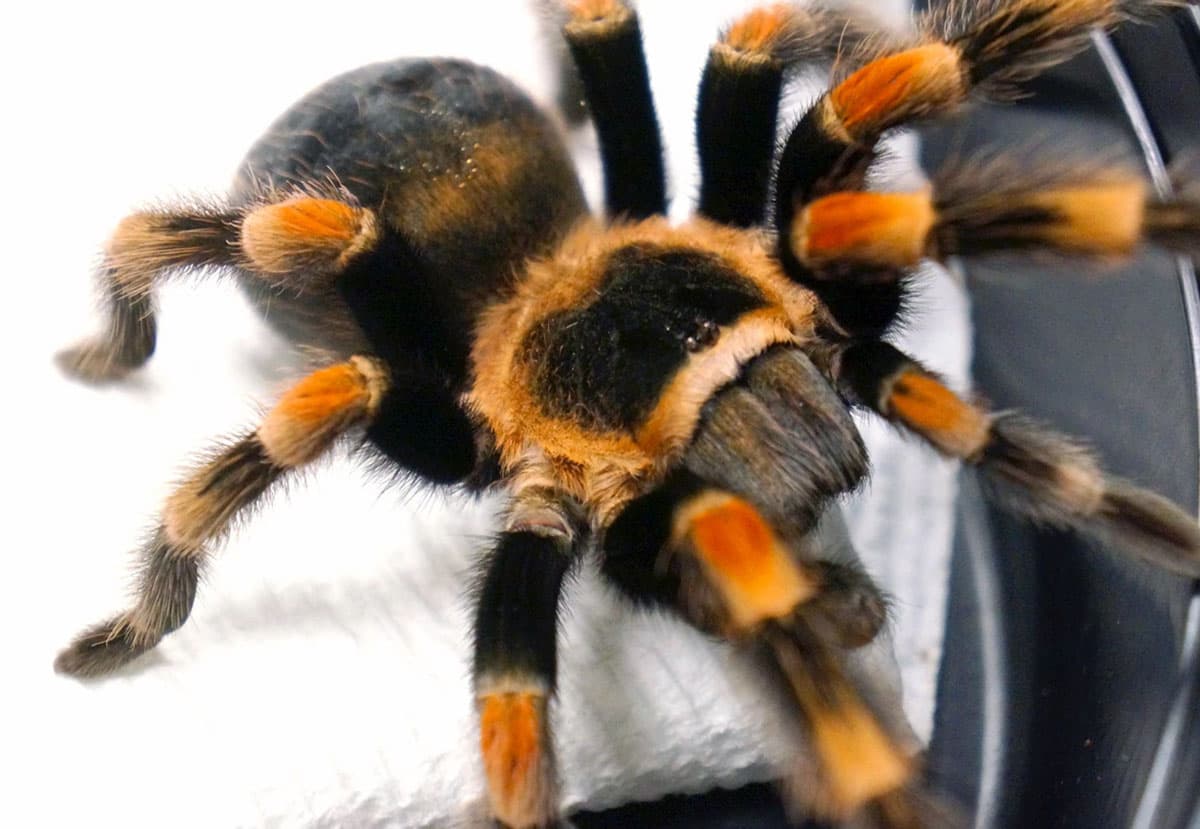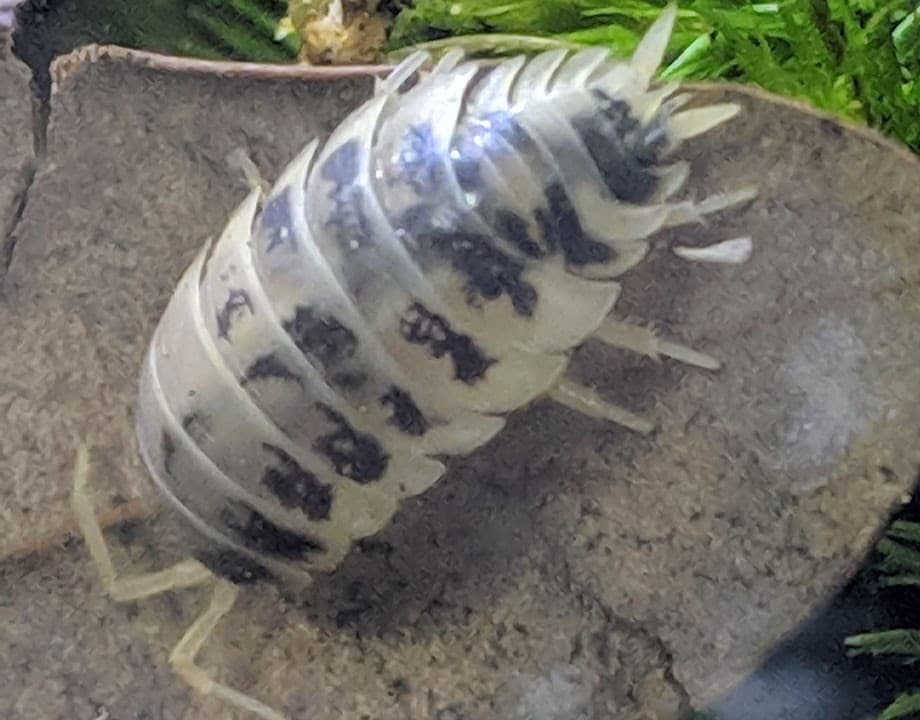
Quick facts
- Some species come from deserts and some from tropical forests. Set up for your species.
- Adult size: about 2–8 inches, depending on species
- Lifespan: often 4–8 years
- Difficulty: beginner to intermediate
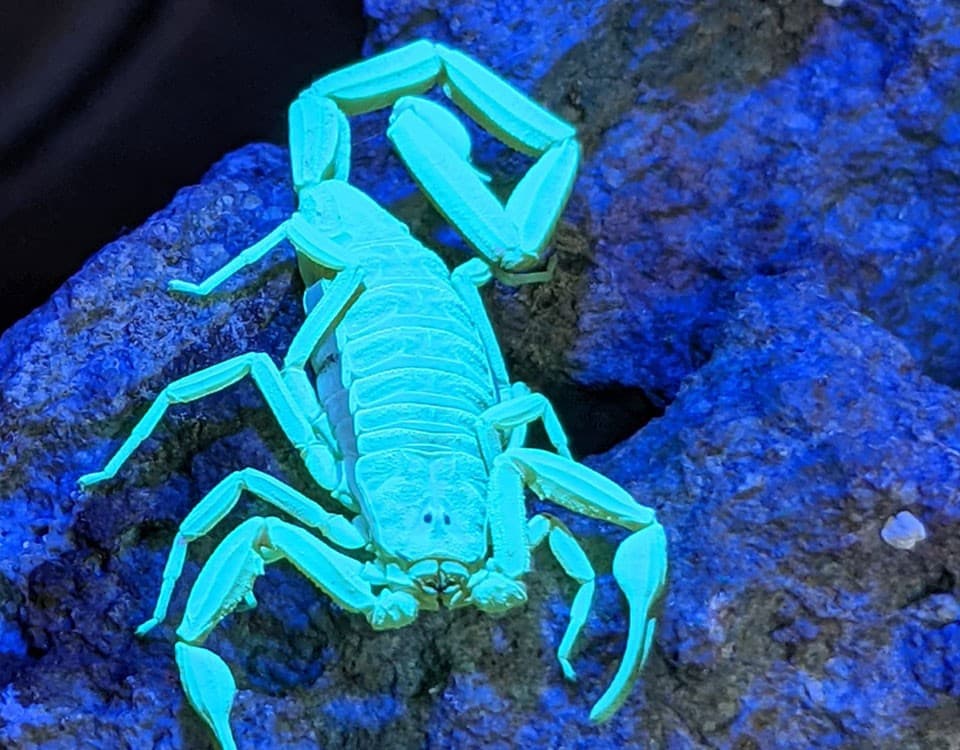
- They glow blue-green under a UV flashlight
Enclosure
Give floor space, not height. A 5–10 gallon tank works for one adult of most species.
Use a secure, locking lid. Add a hide, like cork bark or a half log. Most species should live alone.
Temperature
Tropical species: about 75–85°F. Desert species: about 75–90°F on the warm side, cooler on the other.
If your room is cool, add a small heat mat on the side of the tank with a thermostat.
Lighting & UVB
No UVB needed. Scorpions are active at night.
A UV flashlight is fun for a quick look. Don't leave a UV light on them.
Humidity
Tropical species: keep the substrate moist and mist a few times a week.
Desert species: keep it dry, with one slightly damp corner deep in the substrate.
Substrate
Use enough substrate to dig, at least 3–4 inches.
- Tropical: moist coconut fiber or organic topsoil
- Desert: a packed sand and soil mix that holds a burrow
Diet & feeding
Feed crickets or roaches about the size of the scorpion's body. Adults eat about once a week. Young ones eat more often.
Remove uneaten prey within a day.
Water
Keep a shallow dish of fresh water for both desert and tropical species.
Handling
Scorpions are a look-don't-touch pet. Move them with long tongs or by guiding them into a cup.
All scorpions have venom. Most pet species have a sting like a bee's, but some people react badly. Ask us about your species. If someone is stung and feels unwell, get medical help right away.
Common problems & the vet
If you think something is wrong, find an exotics vet or stop by and ask us.
- Not eating: often a molt is coming. That's normal.
- Don't feed for about a week after a molt
- Stuck molt: usually too dry for the species
- Mites: clean out leftover food
Questions about your setup? Stop by and ask us.