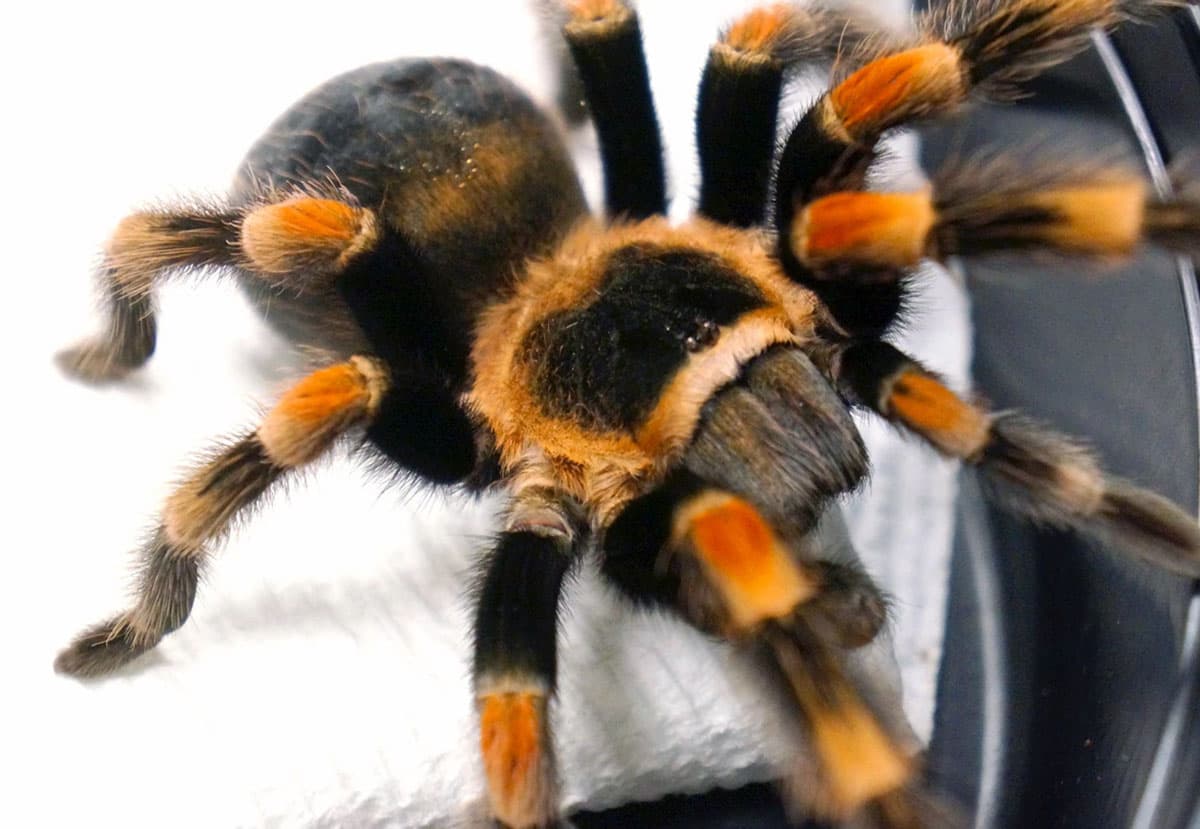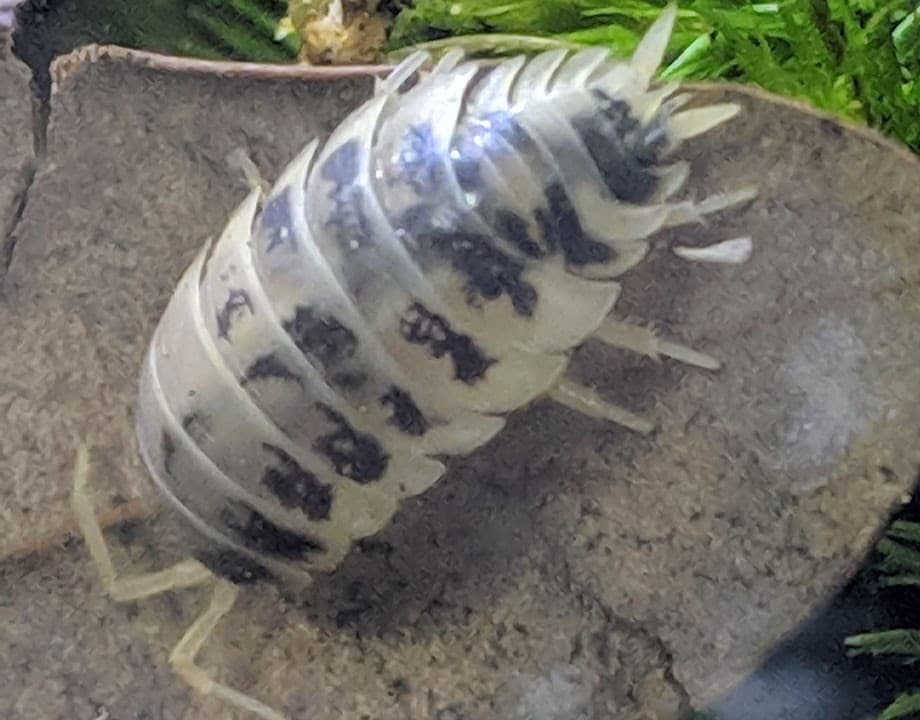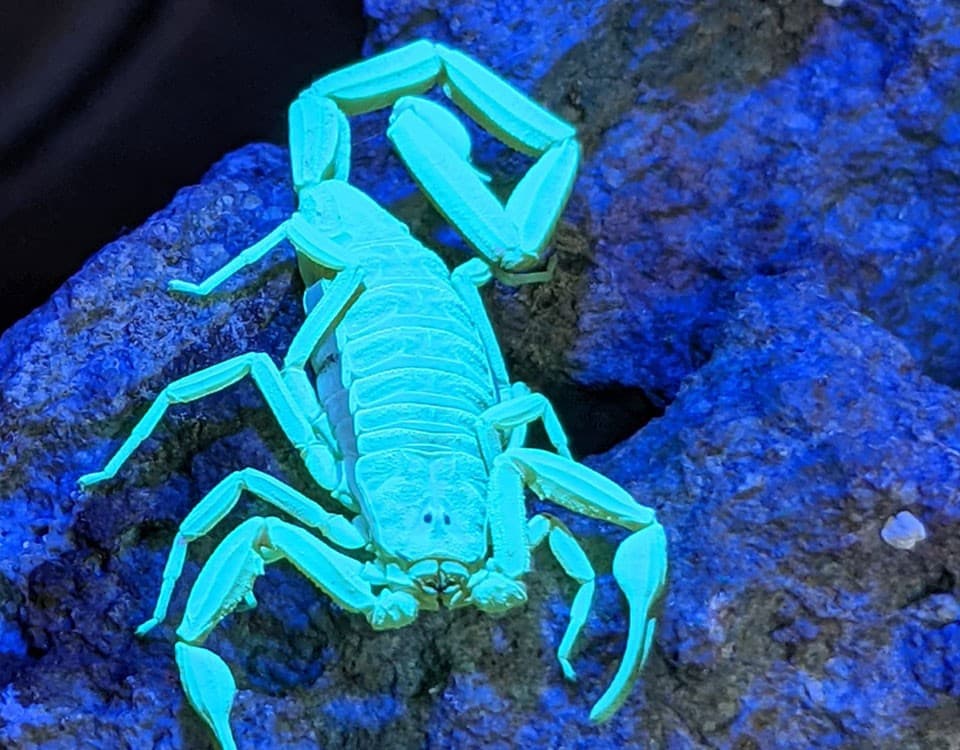
Quick facts
- Many species, from 1-inch types to giants over 8 inches long
- Lifespan: several years; big species often 5–10 years
- Difficulty: beginner
- Calm, slow and easy to watch
Enclosure
Give floor space and depth, not height. A 10-gallon tank or a large plastic tub works for a few adults.
Use a lid with some air holes. Millipedes can climb glass.
Temperature
Normal room temperature, about 70–80°F. Keep them out of direct sun.
Lighting & UVB
None needed. Normal room light is fine.
Humidity
Keep the substrate moist, like a wrung-out sponge. It should never be soggy.
Let the top layer on one side dry a little so they have a choice.
Substrate
Millipedes burrow, eat their bedding and molt underground. Give at least 5 inches of substrate, more for big species.
- Organic topsoil or coconut fiber
- Rotting hardwood (flake soil) mixed in
- Dried oak or maple leaves on top
- Cuttlebone for calcium
Diet & feeding
Rotting wood and leaf litter are their main food. Keep it topped up.
Add small bits of soft vegetables or fruit, like cucumber, squash or banana, once or twice a week. Remove anything that molds.
Water
Moisture comes from the damp substrate. A very shallow dish is fine but not required.
Handling
Most millipedes are fine to hold. Let one walk across your open palm and keep it low.
Some species give off a defensive liquid that can stain or irritate skin. Wash your hands after handling and keep your hands away from your eyes and mouth.
Common problems & the vet
If you think something is wrong, find an exotics vet or stop by and ask us.
- Molting happens underground and takes weeks. Don't dig them up.
- Too dry: they curl up, stop moving or have trouble molting
- Running out of food: add more rotting wood and leaves
- Small mites: often from leftover food, so clean up and feed less
Questions about your setup? Stop by and ask us.