Overview
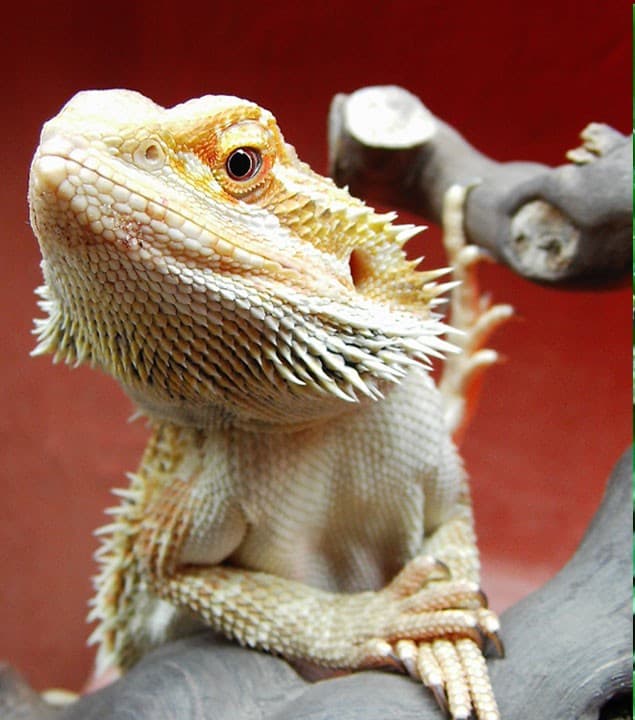
Bearded dragons make great pets. Known as “beardies,” they are easy to care for and have great personalities. They are smart, fun and curious, and are considered the most docile of all lizards. Do your research before you bring your new beardie home, and have all your supplies ready ahead of time, including housing, accessories and food, so your pet settles in smoothly.
Quick facts
- Bearded dragons originate from the dry bushland and desert regions of Australia.
- The scientific name for bearded dragons is Pogona. Many owners call them “beardies.”
- Beardies are omnivores; they eat both plants and animals. Their diet is mostly plants and vegetables, but they also love insects like crickets, roaches and mealworms.
- They get their name from the spiky skin under the neck, which puffs up and turns black like a beard when they’re excited.
- Beardies wave to each other! This is thought to signal submission when a larger or more dominant lizard is near.
- Although usually calm and slow-moving, bearded dragons are surprisingly quick and can run up to 9 mph. They can even run on two legs!
- They usually measure 16–24 inches, tail included.
- Females have thinner tails than males.
- With proper care, beardies can live 10 years or longer.
Enclosure
Beardies are active, so they need plenty of floor space. Tank size depends on your lizard’s age and size; a good rule of thumb is a tank 3 times as long as your dragon. They grow quickly, so starting with a larger tank is a good idea. Bearded dragons are commonly kept in glass terrariums, though some owners use cages made of melamine, PVC or ABS plastic. Use a screen lid to keep your pet from escaping (they can be very skilled escape artists). Avoid glass, plastic or any other solid lid that blocks airflow.
Substrate
Reptile carpet, newspaper or porcelain/ceramic tile are the best options for baby and juvenile beardies, and they are the easiest to keep clean. Avoid small, loose substrates like calcium-based sand, ground walnut shells or playground sand with babies and juveniles; they can cause impaction. Natural sand is okay for adult beardies.
Accessories
Besides a basking perch, you can add branches, rocks or driftwood to make your beardie feel at home. Rock dens or “hides” give shade and a place to retreat, and if placed well, they can double as a basking perch. Provide a food bowl and a bowl of fresh dechlorinated water daily. Keep the water bowl shallow (less than an inch deep) so your beardie can’t drown.
Temperature & lighting
Beardies come from the deserts of Australia, so they need full-spectrum light (not a standard household bulb) for 12 to 14 hours a day. Full-spectrum bulbs give off light in all the UV ranges bearded dragons need to stay healthy. Spread the light evenly across the tank. Your pet also needs a basking bulb (usually set on top of the enclosure) and a way to get close to its heat, like a reptile hammock or basking ramp. Proper heat is essential to a bearded dragon’s health. Use two good-quality thermometers to keep a proper temperature gradient. The basking side should be warmer: 90–93°F for adults, 95–100°F for juveniles. The other side should be cooler: 80–90°F. At night, turn the lights off and let the temperature drop to 70–75°F. Keep humidity below 60% at all times.
Diet & nutrition
Bearded dragons need a varied diet, usually vegetables, insects and non-citrus fruit. Babies and juveniles need more live insects than adults because they are growing and need the protein. Feeder insects should be gut-loaded and no larger than the space between your beardie’s eyes. We recommend dusting insects with calcium and vitamin D at least once a week. Commercial diets made with real crickets are also a good option and can give your pet a proper balance of nutrients. Some plants, vegetables and vitamins are toxic to bearded dragons and should be avoided; lists are available online, so follow them closely. Provide a food bowl and a bowl of fresh dechlorinated water daily, less than an inch deep. Beardies don’t always drink from their bowl, so mist your beardie with a spray bottle several times a day. This mimics rainfall in the wild, and you’ll see your pet lick the droplets from its nose.
Handling & safety
Beardies handle being held and interacting with people well. They will likely spend part of the day in a hiding spot. Males are territorial and should be housed separately. Do not house different reptile species together. Bearded dragons go through brumation, a kind of hibernation that often happens in fall or winter and can last weeks or months. Your beardie may sleep more or not wake up at all during that time. Juveniles shed as they grow; adults shed too, but less often. Before a shed, their eyes may look puffy and their skin duller than usual. Contact a vet if you notice signs of illness or distress, such as weight loss or less appetite, swelling, discharge from the mouth or nose, lethargy, labored breathing, paralyzed limbs or abnormal feces.
Questions about your setup? Stop by and ask us.