Quick facts
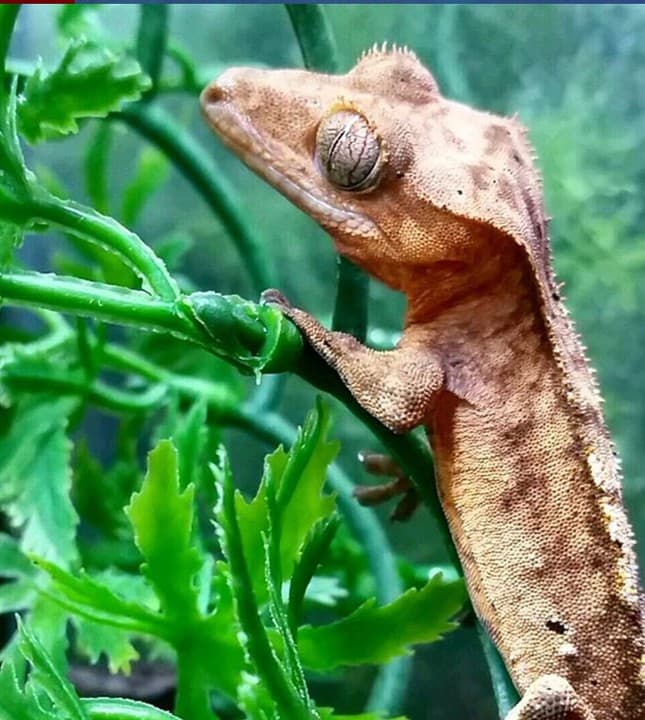
- Scientific name: Correlophus ciliatus
- Adult size: about 7–9 inches with the tail
- Lifespan: 15–20 years
- Difficulty: beginner
Enclosure
Crested geckos climb, so they need a tall enclosure. One adult needs at least 18 × 18 × 24 inches.
Babies do better in a smaller setup at first so they can find their food.
- Lots of branches, vines and plants (live or fake)
- Cover so the gecko can hide up high
- A feeding ledge for the food dish
Temperature
Cresties like it cooler than most reptiles. Heat is more dangerous to them than a little chill.
- Day: about 72–78°F
- Night: about 65–72°F
- Stay under about 82°F; higher can make them sick
Lighting & UVB
A crested gecko can live without UVB if it eats a complete diet. Low-level UVB is still a nice extra. Keep a 12-hour day/night cycle.
Humidity
Mist in the evening so the humidity jumps to about 70–80%. Let it dry back to about 50–60% during the day. Don't keep it soaking wet all the time. That causes mold and skin problems.
Substrate
Coconut fiber or a soil mix holds moisture well. Paper towel is fine for young geckos.
Diet & feeding
Feed a complete crested gecko diet (a powder you mix with water). Offer it about 3 times a week and remove it after a day or so.
Small insects dusted with calcium make a good treat once a week or so.
Water
Most cresties drink droplets after misting. A small, shallow water dish is a good backup.
Handling
Keep sessions short and low to the ground. Cresties jump.
A stressed crestie can drop its tail. It will not grow back, so never grab the tail.
Common problems & the vet
If something seems off, see a reptile-savvy vet. Don't wait it out.
- Soft or bent bones: usually from an incomplete diet or no calcium
- Stuck shed on toes or tail tip: check humidity
- Not eating: often temps too warm or a recent move
- Dropped tail: it heals, but keep the cage clean
Questions about your setup? Stop by and ask us.