Quick facts
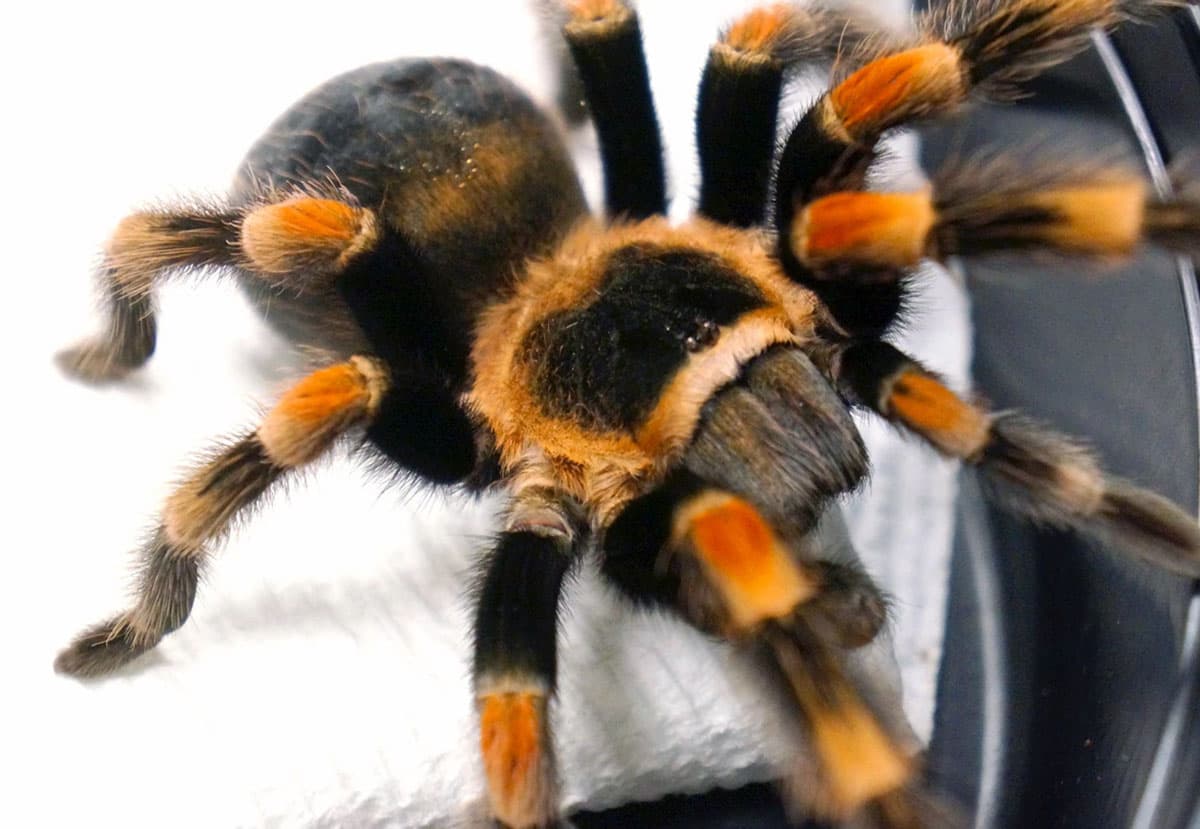
- Common beginner species: Mexican red-knee and other Brachypelma, Chilean rose
- Adult size: about 4–6 inch leg span
- Lifespan: females often 15–30 years; males usually only a few years
- Difficulty: beginner
Enclosure
Most beginner tarantulas live on the ground. Give floor space, not height. A fall from high up can kill a tarantula.
A good size is about 2–3 times the leg span wide, and not much taller than the leg span above the substrate.
- A hide or burrow start
- A shallow water dish
- Good ventilation
Temperature
Normal room temperature, about 70–80°F, is usually fine.
Skip heat mats. They can dry out or overheat a tarantula. Keep the enclosure out of direct sun.
Lighting & UVB
No special lighting needed. Normal room light is fine.
Humidity
Most beginner species do fine at normal room humidity with a water dish. Some keepers dampen one corner of the substrate now and then. Species vary, so ask us about yours.
Substrate
Use 3–4 inches or more of coconut fiber or plain topsoil. Many tarantulas like to dig.
Diet & feeding
Feed crickets or roaches no bigger than the tarantula's body. Adults eat about every 1–2 weeks. Young ones eat more often.
Remove uneaten prey within a day. A live cricket can hurt a tarantula during a molt.
Many tarantulas fast for weeks before a molt. That's normal.
Water
Keep a shallow dish of fresh water. Refill it often.
Handling
We don't recommend handling. A fall can be fatal, and many species can kick irritating hairs.
Their bite is like a bee sting for most people, but some people are allergic.
Common problems & the vet
Tarantula vets are rare. Stop by and we can help you figure it out.
- Lying on its back: usually a molt starting. Don't touch it.
- Don't feed for about a week after a molt, until the fangs harden
- Shriveled belly: dehydration, so check the water dish
- Falls: keep the enclosure low
Questions about your setup? Stop by and ask us.