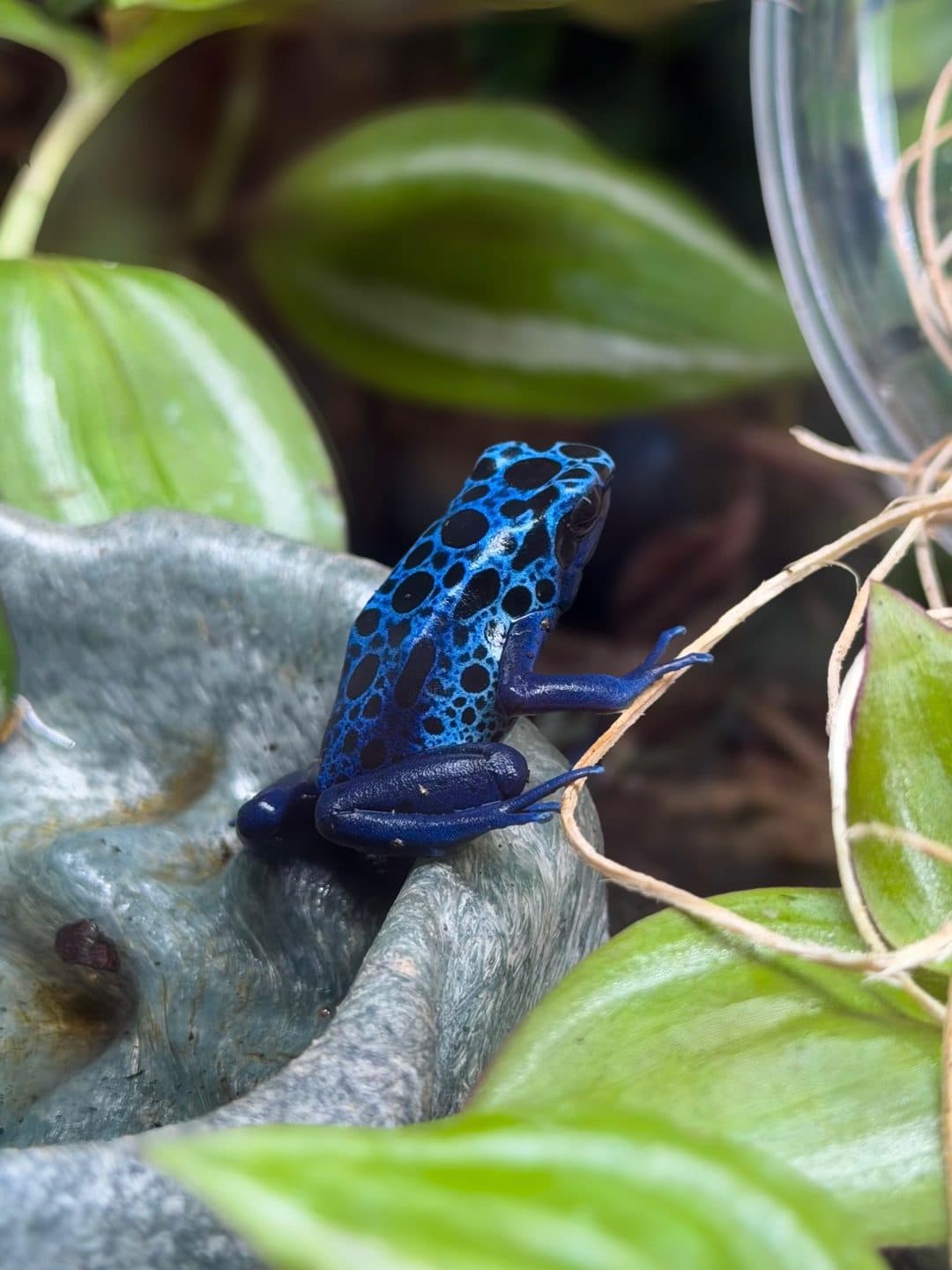
Quick facts
- Scientific name: Dendrobates (e.g. D. tinctorius, D. auratus, D. leucomelas)
- Adult size: about 1–2 inches
- Lifespan: 10–15 years
- Difficulty: intermediate (the setup is the work)
- Captive-bred dart frogs are not poisonous. Wild frogs get their toxins from their wild diet.
Enclosure
Dart frogs live in a planted glass vivarium. A pair needs at least an 18 × 18 × 18 inch tank. One frog can live in a 10-gallon-size tank.
Some species fight with their own kind, especially females. Ask us before mixing frogs.
- Live plants
- Leaf litter on the floor
- Tight-fitting lid (feeder flies escape fast)
Temperature
Dart frogs like it mild. Overheating is a real danger.
- Day: about 70–78°F
- Night: can drop a few degrees
- Keep it under about 80°F
Lighting & UVB
An LED plant light keeps the plants growing. Many keepers add low-level UVB. Keep a 12-hour day.
Humidity
Keep it high: about 80–100%. Mist once or twice a day. Leave a little airflow so it doesn't get stuffy and moldy.
Substrate
Most keepers build a bioactive floor: a drainage layer, a soil mix, then leaf litter. Springtails and isopods clean up waste and mold.
Diet & feeding
Feed tiny live insects: fruit flies and springtails. Dust every feeding with a calcium and vitamin supplement.
Young frogs eat daily. Adults eat every day or two.
Water
Use dechlorinated or RO water for misting and the water dish. Keep the dish very shallow, since these frogs are small.
Handling
Dart frogs are for watching, not holding. Handle only to move them, with clean, wet hands or a cup.
Common problems & the vet
If something seems off, see a vet who treats amphibians.
- Thin frogs: not enough food, or competition from tank mates
- Froglets with weak legs: usually a supplement problem
- Lethargy in warm weather: check temps
- Missed tongue strikes: can be a vitamin A problem
Questions about your setup? Stop by and ask us.