Quick facts
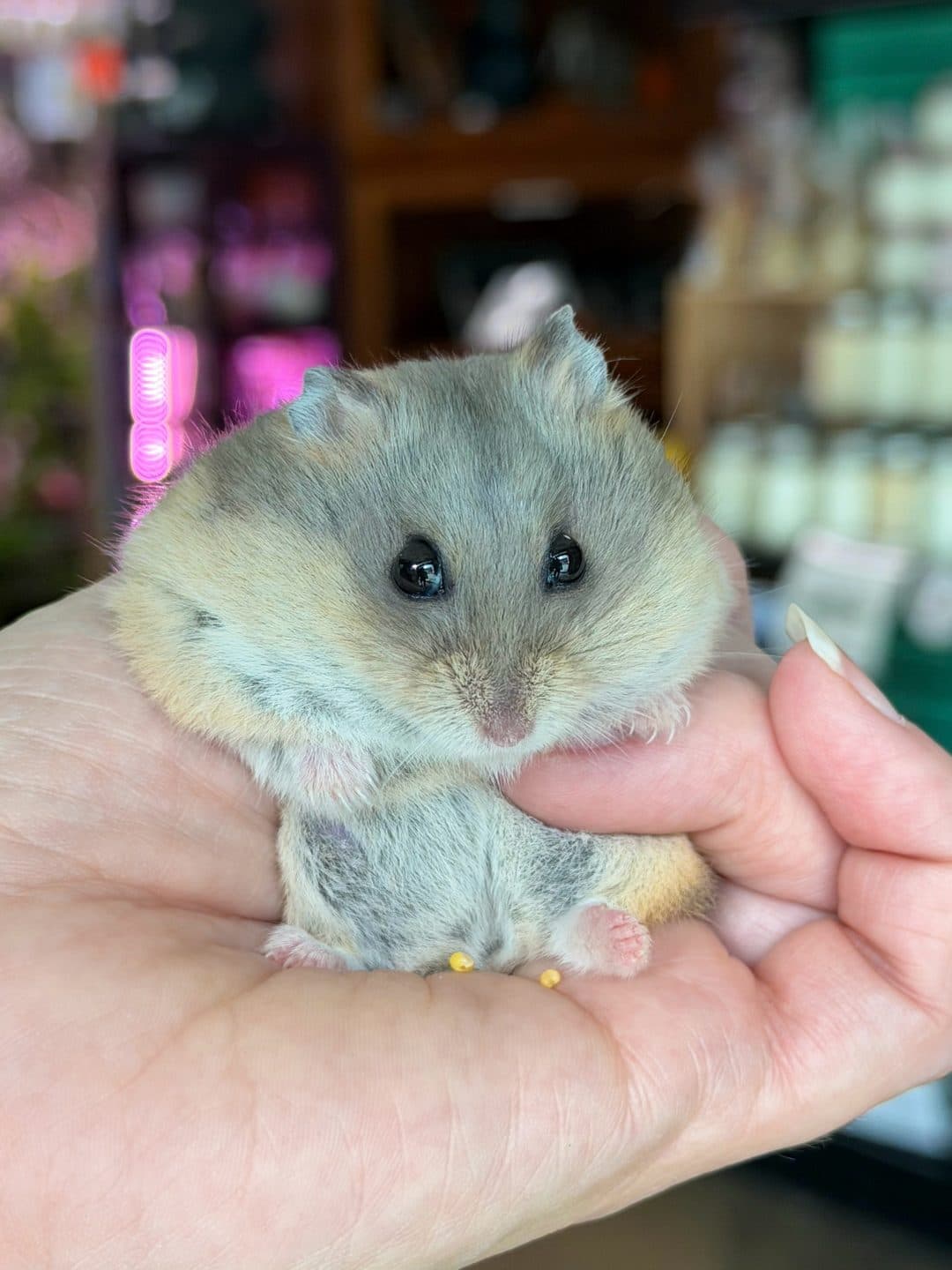
- Common types: Syrian (golden) and dwarf hamsters like Campbell's
- Adult size: Syrian about 5–7 inches; dwarfs about 2–4 inches
- Lifespan: about 2–3 years
- Most active at night
Enclosure
Hamsters need more room than most store cages give. Many welfare groups suggest at least 40 × 20 inches of open floor space. Bigger is better.
Syrian hamsters must live alone. Dwarf hamsters sometimes share, but fights happen, so one per cage is safest.
- Deep bedding to burrow in, 6 inches or more
- A solid-surface wheel big enough that the back stays straight (about 8–12 inches for Syrians)
- Hides, chews and a sand bath
Temperature
Keep the room about 65–75°F. Avoid drafts, heaters and direct sun.
Lighting & UVB
Normal room light. Put the cage in a quiet spot, since hamsters sleep during the day.
Humidity
Normal household humidity. Keep the cage dry and well ventilated.
Substrate
Use paper-based or aspen bedding.
- Never use cedar
- Avoid pine and scented beddings
Diet & feeding
Feed a quality hamster pellet or lab block as the main food. A seed mix is fine in small amounts.
Add small bits of fresh vegetables a few times a week.
Dwarf hamsters can get diabetes. Keep sugary fruit and treats very small.
Water
Fresh water every day in a bottle or heavy bowl. Check that the bottle spout works.
Handling
Let your hamster settle for a few days first.
Handle in the evening when it's awake. Scoop it up with both hands. Sit low over something soft. A fall can hurt them.
A hamster woken up suddenly may bite.
Common problems & the vet
Small animals hide illness. See an exotic-animal vet if something seems off.
- Wet, messy rear end ('wet tail'). This is an emergency.
- Overgrown teeth: give safe chews
- Lumps on the face: can be a stuck cheek pouch or an abscess
- Drinking and peeing a lot (dwarfs): can be diabetes
Questions about your setup? Stop by and ask us.