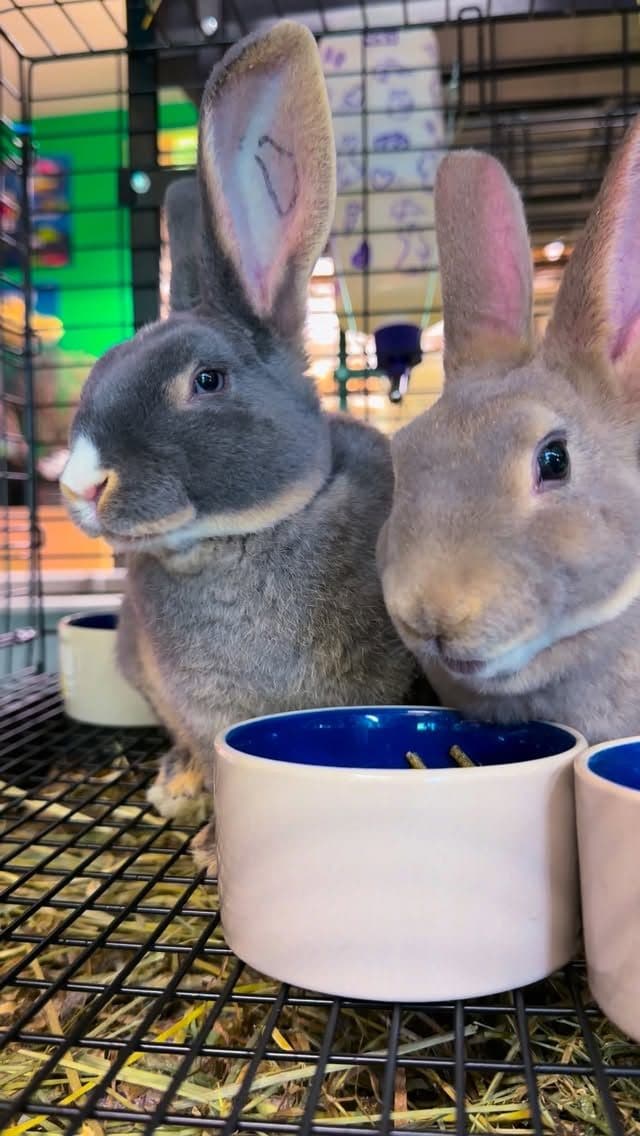
Quick facts
- Size: about 2–12+ pounds, depending on the breed
- Lifespan: about 8–12 years
- Social: many rabbits are happiest with a bonded friend
- Needs daily time out of the enclosure
Enclosure
Rabbits need room to hop, stretch and stand up. An exercise pen of at least 4 × 4 feet is a good start, plus several hours of free-roam time each day.
Use solid flooring, not wire. Wire floors hurt their feet. Rex rabbits have thin fur on their feet and need soft footing.
- A hide box
- A litter box
- Chew toys
Temperature
Rabbits handle cool better than heat. Keep them about 60–75°F.
Above about 80°F, they can get heatstroke. Keep them out of direct sun.
Lighting & UVB
Normal room light and a normal day/night cycle.
Humidity
Normal household humidity. Keep their area dry and well ventilated.
Substrate
Use paper-based litter in the litter box, with hay on top. Rabbits like to eat and potty at the same time.
- No clumping cat litter
- Never use cedar
- Avoid pine shavings
Diet & feeding
Hay is most of the diet. Give unlimited fresh grass hay, like timothy or orchard grass.
Add fresh leafy greens every day, and a small measured amount of plain timothy pellets.
Fruit and treats should be tiny. Young rabbits under about 6 months may get alfalfa hay. Ask us when to switch.
Water
Fresh water every day. Many rabbits drink more from a heavy bowl than a bottle.
Handling
Rabbits have fragile backs. Always support the hind end when you lift them. Never pick one up by the ears.
Many rabbits don't like being carried. Sit on the floor and let them come to you.
Common problems & the vet
Find a rabbit-savvy vet before you need one. Ask them about spay/neuter and vaccines.
- Not eating or no droppings for 12 hours: gut slowdown (GI stasis). This is an emergency.
- Overgrown teeth: more hay helps wear them down
- Messy rear end: can attract flies in summer (flystrike)
- Red or sore feet: check flooring
Questions about your setup? Stop by and ask us.