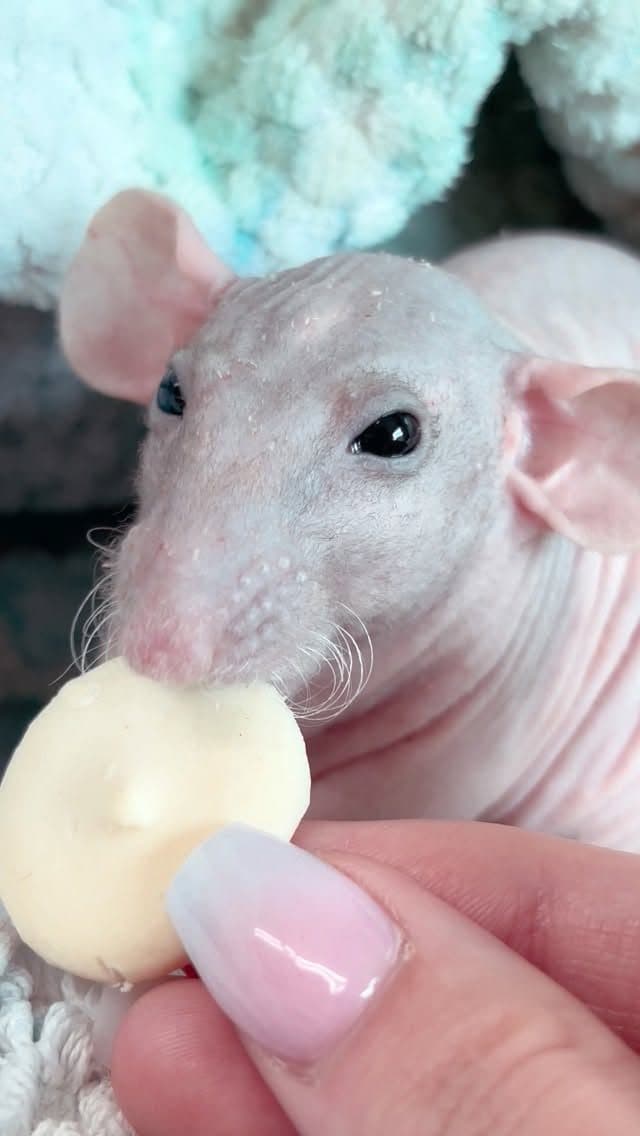
Quick facts
- Scientific name: Rattus norvegicus (fancy rat)
- Adult size: about 9–11 inch body plus a long tail
- Lifespan: about 2–3 years
- Very social and smart. Hand-tame rats are a Zoo Creatures specialty
Enclosure
Rats should live in same-sex pairs or groups. A single rat gets lonely.
Use a tall, multi-level wire cage with solid floors and shelves. Bar spacing should be about ½ inch or less, and narrower for young rats.
Give them time out of the cage every day to explore, with supervision.
- Hammocks, hides and ropes
- Chew toys
- A litter tray in the corner they pick
Temperature
Keep the room about 65–75°F. Rats overheat easily, so keep them out of direct sun.
Hairless rats lose heat faster. Keep them a little warmer and give extra bedding and hides.
Lighting & UVB
Normal room light and a normal day/night cycle.
Humidity
Normal household humidity. Avoid damp spots; rats have sensitive lungs.
Substrate
Use paper-based or aspen bedding. Clean often, because ammonia from urine bothers their lungs.
- Never use cedar
- Avoid pine and scented beddings
Diet & feeding
Feed a quality rat block or pellet as the main food.
Add small amounts of fresh vegetables. Keep fatty and sugary treats small.
Water
Fresh water every day in a bottle. Check that the spout works.
Handling
Handle your rats every day. They love it. Scoop them up with a hand under the chest and one under the rear.
Never pick a rat up by its tail.
Common problems & the vet
Rats hide illness. See an exotic-animal vet if something seems off.
- Sneezing, wheezing or noisy breathing: respiratory infection
- Red stains around the eyes or nose: a sign of stress or illness
- Lumps: rats often get tumors, so have them checked early
- Overgrown teeth: give safe chews
Questions about your setup? Stop by and ask us.